
NOBLE PROPHET'S GLORIOUS MISSION:
"Those who follow the Messenger, the unlettered Prophet, whom They find mentioned In their own (scriptures),- In the Torah and the Gospel;- for He commands them what is just and forbids them what is evil; He allows them As lawful what is good (and pure) and prohibits them from what is bad (and impure); He releases them from their heavy burdens and from the yokes that are upon them. So it is those who believe In him, honour him, help him, and follow the light which is sent down with him,- it is They who will prosper." (The Holy Qur'an: 7: 157)
Showing posts with label Talking of Masjid-un-Nabwi. Show all posts
History of Masjid-un-Nabwi: Construction and Extension
Saturday, May 22, 2010By. Dr. Imtiaz Ahmad
It is mentioned in Bukhari as narrated by Anas bin Malik (RU) that when the Prophet (SAS) migrated to Madina area he stayed in Quba for fourteen days in the tribe of Banu Amr. He then proceeded to Madina. He arrived in Madina in the area of Banu Najjar near the house of Abu Ayyub Ansari (RU). The Prophet (SAS) intended to build a mosque there. This land was owned by two orphans Sahl and Suhail. The Prophet (SAS) asked Abu Bakr (RU) to pay ten dinars to them for the land.
The Prophet (SAS) laid down the foundation of this mosque during Rabi-ul-Awwal 1H. It’s dimensions were about 35x30 meters. The foundation was laid with stones and the walls were built of unbaked bricks. Columns were made of trunks of palm trees and the roof was covered by branches of palm trees. It had three doors. One door was in the southern wall which was closed after the change of Qiblah. As a result of this a new door was opened in the northern wall. Other two doors were Bab Rahmah in the western wall and Bab Jibreel in the eastern wall.
The Prophet (SAS) laid down the foundation of this mosque during Rabi-ul-Awwal 1H. It’s dimensions were about 35x30 meters. The foundation was laid with stones and the walls were built of unbaked bricks. Columns were made of trunks of palm trees and the roof was covered by branches of palm trees. It had three doors. One door was in the southern wall which was closed after the change of Qiblah. As a result of this a new door was opened in the northern wall. Other two doors were Bab Rahmah in the western wall and Bab Jibreel in the eastern wall.
The Prophet (SAS) personally took part in the construction activities of this mosque. He was reciting the following while carrying the stones with his own hands:
O Allah, the good done for the Day of Judgement is the real good. Please help the Mohajreen and Ansar.
Before the arrival of the Prophet (SAS) in Madina, Musab bin Omair (RU) used to lead the salat at this spot. In his absence Asad bin Zarara (RU) used to lead the salat at this place.
As mentioned in Bukhari and narrated by Abada bin Samat (RU), the Ansar came to the Prophet (SAS) and offered a large amount of their wealth for decoration of the mosque. The Prophet (SAS) said, “I do not want to be different from my brother Musa (AS). A cottage like the cottage of Musa (AS) is sufficient for us.” Hence the Prophet (SAS) preferred a simple mosque and encouraged more and more people to pray there. On the contrary, we have very decorative mosques these days with very little attendance there on the regular basis.
EXTENSION BY THE PROPHET (SAS)
After the Prophet’s (SAS) return from the battle of Khyber, he ordered to expand the mosque during Muharram 7H. Width was increased by 20 meters and the length by 15 meters. The new dimensions became 50x50 meters. The northern boundary of the Mosque was where the Turkish construction ends in this direction. On the west side its boundary was five columns west of the pulpit. You will see written on each column there ‘The boundary of Prophet’s Mosque.’ The foundation was laid with stones and the walls were built of unbaked mud bricks like before. The columns were made of palm tree and the roof was covered by branches of palm trees. The height of the roof was increased from 2½ meters to 3½ meters. Caliph Osman (RU) paid for the land for this addition of the mosque.
Qushairi (RU), narrated that when the enemies surrounded Caliph Osman’s (RU) house, he said to them, “Do you recall when the Prophet (SAS) said, ‘Who will purchase the land for the extension of the mosque and be rewarded with paradise?’ I purchased the land for the addition of mosque from my personal funds. Today you don’t permit me even to offer my salat there.’” (Tirmidhi)
RENOVATION BY CALIPH ABU BAKR (RU)
As mentioned in Baihaqi and narrated by Abdulla bin Omar (RU), some of the columns of trunks of trees got worn out. Abu Bakr (RU) replaced them with similar columns and covered the roof with branches of palm tree.
EXTENSION BY CALIPH OMAR FAROOQ (RU)
People requested the Caliph to extend the mosque since the population of muslims increased considerably. In 17H, Omar (RU) extended the mosque by five meters to the south, 15 meters to the north and 10 meters to the west. New dimensions of mosque thus became 70x60 meters. The western boundary of the mosque was upto seventh column from the pulpit. The roof was raised to 5½ meters. In the western wall a new door was added, called Bab Salam. Similarly a door was added in the eastern wall, called Bab Nisa.
Omar (RU) also made a platform on the eastern side of the mosque by the side of the house of Khaled bin Waleed. Since it is not permitted to gossip or raise voice in a mosque, Omar (RU) said, “Those who want to engage themselves in gossip or recite poetry may use this platform.”
EXTENSION BY CALIPH OSMAN (RU)
In 29H, Caliph Osman (RU) further extended the mosque by about 5 meters to south, by about 5 meters to north and by about 5 meters westwards. Hence the mosque was extended upto eight columns westward from the pulpit. It is interesting to note that the southern wall of the mosque is still at the same place today and no extension was ever made in this direction since the time of Caliph Osman (RU).
The building was constructed with decorative stones and lime mortar was used as construction material. The roof was made of teak wood. The columns were also made of decorative stones and were hollow inside. Iron bars and molten lead was put inside the columns to reinforce them. Osman (RU) supervised the construction activities personally.
He made a protective enclosure around the area where he led the salat to avoid attack on him during the salat. This enclosure had windows and people could see the Imam through these windows. At present the Imam leads the salat from the same spot where Osman (RU) did. There is no protective enclosure nowadays. However, the security personnel are posted there before, during and after the salat to avoid any mishap.
EXTENSION MADE BY AL-WALEED THE OMAYYAD RULER
In 88H, Waleed bin Abdul Malik ordered the Governor of Madina, Omar bin Abdul Aziz to extend the mosque further. Omar bin Abdul Aziz extended it about ten meters to the west and about fifteen meters to the east. It is necessary to mention here that by this time all the wives of the Prophet (SAS) had passed away. Omar bin Abdul Aziz (RU) purchased their Hujrats (huts) from their relatives and included this area in the mosque. Aisha’s hujra was left as it was because of the graves in it.
The building and the columns were reinforced with iron bars and molten lead. The roof was made of teakwood and was raised to a height of 12.5 meters. This lower roof was covered by another roof to protect against severe weather. Marble slabs were fixed on the inner side of walls. These walls also had multicolored stones and gold polish put on them at different spots. Gold polish was also put on the frames of the doors. Omar bin Abdul Aziz (RU) personally supervised the construction. He was the one who built four minarets on the four corners of the mosque and the new mosque had twenty doors. These construction activities took three years from 88H through 91H.
EXTENSION MADE BY AL-MAHDI, THE ABBASID RULER
This extension took place from 161H through 165H. and the mosque was extended in the northerly direction. The construction was supervised by Abdullah bin Asim bin Omar bin Abdul Aziz. No further extension was needed till 654H.
FIRST FIRE AND RE-CONSTRUCTION
Samhoudi described it as follows. This fire took place during the night of the first of Ramadhan of 654H. The attendant of the Prophet’s Mosque, Abu Bakr bin Ohad entered the storeroom of the mosque to collect the torches to light the minarets. He made the following mistake. He left a lighted candle near the container where the torches were kept. The container caught fire and spread very fast. The Governor of Madina and other people tried to put off the fire. They failed and in no time the roof, the pulpit, the doors and custodial rooms were reduced to ashes.
In 655H, Al-Mutassim billa, the Abbasid rule started the reconstruction. It was however interrupted since the Tartars invaded and occupied Baghdad. Later on the rulers of Egypt and Yemen tried to complete the construction. Among them the contribution of Baibars is noteworthy since he built the double roof as before.
SECOND FIRE AND RE-CONSTRUCTION
The second fire took place in 886H. The Muezzin, Shamsuddin was in a minaret during the later part of the night of the thirteenth of Ramadhan. The lightening struck this minaret and it caught fire. Shamsuddin died there and then. The fire spread through the roof. The Governor of Madina and other people tried their best to put off the fire. They again failed. The fire burnt the roof, the bookrooms and damaged many other areas. Sultan Qaitabai reconstructed the mosque in 888H. He made only one roof.
EXTENSION BY SULTAN ABDUL MAJEED
Sultan Qaitabai’s construction had been there for three hundred and seventy seven years. The various parts of the mosque had worn out. Imam of this mosque, Dawud Pasha requested Sultan Abdul Majeed of the Ottoman Empire at Istanbul to reconstruct the mosque. Sultan sent two engineers namely, Ramzi Afandi and Osman Afandi. They designed the mosque. A model of proposed masjid was sent to Sultan for approval. The construction work was done between 1265H and 1277H under the supervision of Asad Afandi. They found red stone in Aqiq valley near Madina which was used for this construction.
A very extensive decorative work was done in all areas. For example, it took three years to write the verses of the Quran and the names of the Prophet (SAS). It was done by prominent calligrapher Abdullah Zahidi Afandi Many new doors and two minarets were added. A separate building was constructed in the vicinity of the mosque to conduct the educational activities for the children. This building still exists on the two sides of old Bab Majeedi and is used as library.
On the completion of the construction activities, it was decided to write the following hadith on a stone and fix this stone in the building:
The reward of one salat in my mosque is better than one thousand salat offered in any other mosque except Masjid-ul-Haram (in Makkah).
This writing can still be seen in the middle of northern wall of the Turkish extension. On the northern side, however, the covered part of the mosque was upto the wall where the above stone is fixed. There was also a large open area for salat just north of this covered mosque. All construction activities were conducted in such away that daily congregational salat was not disrupted. The total cost was seven hundred thousand Ginee. This did not include the transportation expenses of construction materials by land and sea.
FIRST SAUDI EXTENSION (1368H - 1375H)
It was started by King Abdul Aziz and was completed by King Saud bin Abdul Aziz. The foundation stone for this can be seen by side of old Bab King Saud. The foundation stone was placed by Saud bin Abdul Aziz and it has following wording.
King Saud put these four stones in following the footprints of Prophet Mohammed (SAS). It was done in the month of Rabia Awwal of 1373 H.
Special care was taken to blend the Turkish and Saudi extension and they complement each other beautifully. At that time there were five minarets of the Prophet’s Mosque. Three of these minarets were removed. One of these minarets was on Bab Rahmah. The other two were on the north side of the mosque and were known as minaret Osmania and minaret Majeedia. Saudi Government constructed two new minarets on the two corners of the northern wall of the mosque. Hence the total number of minarets after this extension became four. The dimensions of this extension were 198m × 91m and it was just north of the open space designed by the Turks.
Even after this extension there was not enough space for the pilgrims. In 1393 H, King Faisal purchased the adjacent properties to the mosque for fifty million riyals. He set up permanent sheds in an area of thirty five thousand square meters with arrangement of lights and fans in them. This covered area was extended up to King Abdul Aziz library. These sheds were removed during the second Saudi Extension Plan.
SECOND SAUDI EXTENSION 1405H - 1414H
King Fahd bin Abdul Aziz was always very keen to make major extensions in the Prophet’s Mosque just like he did in Masjid-al-Haram in Makkah. He personally laid foundation stone by the side of Bab Salam with the following writing on it.
In the Name of Allah (SWT), the Most Gracious, the Most Merciful.
In houses (mosques) which Allah has ordered to be raised (to be cleaned, and to be honoured), in them His Name is remembered. Therein glorify Him (Allah) in the mornings and in the afternoons or the evenings. (An-Nur # 36)
The servant of both Harams, King Fahd bin Abdul Aziz put this foundation stone for the extension and construction of the Prophet’s mosque (Second Saudi Extension). It took place on Friday, ninth of Safar, 1405H ( Nov. 2, 1984 )
Similarly at the end of the construction activities King Fahd laid another stone near Bab Bilal with the following wording to mark the completion of this extension:
In the Name of Allah (SWT) and with blessings of Allah (SWT) the servant of both Harams, King Fahd bin Abdul Aziz put this last stone to mark the end of extension of Prophet’s Mosque on Friday, the 4th of Dhul-Qada 1414H (April 15th, 1994). It is to serve the cause of Islam and to serve the Muslims. All praises are for Allah (SWT) , the Creator of all the universes.
The following statistics gives a bird’s eye view of the various extensions:
Covered area of mosque up to Turkish extension 4,056 sq.m.
Addition by the first Saudi extension 12,270 sq.m.
Total area (Turkish plus Saudi extensions) 16,326 sq.m.
So far it could accommodate 28,000 people for salat.
After the second Saudi extension.
1- The area of the floor. 98,326 sq.m.
2- Area of roof 67,000 sq.m.
3- Area covered by the domes 8,750 sq.m.
4- The available area for salat on the roof (2 minus 3) 58,250 sq.m.
Hence roof alone can accommodate 90,000 worshippers for salat.
5- Total area available for salat, (1 plus 4) 156,576 sq.m.
In this area 268,000 people can pray.
Hence, at the end of second Saudi extension nine times more people could offer salat in the mosque as compared with the number at the end of first Saudi extension.
Furthermore, there are open areas around the covered mosque which are specially designed for salat. The total area of such open space is 235,000 sq.m. Out of this 135,000 sq.m can be used for offering salat and it can accommodate 430,000 people for salat. Hence after the second Saudi extension, the mosque and the open space can accommodate 698,000 people for salat.
LADIES PRAYING AREA
In Islam the intermixing of men and women is totally prohibited. Hence two special areas are designated for women to offer salat. One is in the north-eastern corner of the mosque stretching over sixteen thousand square meters. The other one is in the north western corner of the mosque consisting of eight thousand square meters. There are partitions placed between men and women areas. The doors for entry and exit for these areas are also earmarked for women only. Numbers of these doors are 13, 14, 16, 17, 23, 24, 25, 26, 28, 29, 30.
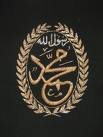
It would be interesting to note that in the middle of all doors of the mosque is written:
" Mohammad (SAS)"
Furthermore on the top of each door it is inscribed in stone Enter it with peace and security. Similarly it is written above all the windows of the mosque:
La Ilaha il-lal-lah Muhammad-ur-Rasoolullah
Now I shall describe briefly some other features of the second Saudi Extension.
MOVABLE DOMES
In order to provide fresh and natural air inside the mosque twenty seven movable domes have been built. They are opened and closed electrically by a computer. No sound is produced during their opening and closing. They are exquisitely beautiful and 2.5 kilogram gold has been used for gold work on each dome.
ESCALATORS AND STAIRS
There are six escalators to transport people from the ground floor to roof. These are at the doors numbering 6, 10, 15, 27, 31 and 36. There are also eighteen regular stairs to go from the ground floor to the roof.
MINARETS
Six new minarets were constructed. Four of them are at the four corners of this extension. Two of them are built on Bab King Fahd. They resemble the minarets of the First Saudi Extension. Each of the new minaret is 104 meters high and is 32 meters higher than each minaret of the first Saudi Extension.
BASEMENT
Area of the basement is 82,000 square meters. Its roof is four meters high. There are 2,554 columns in it. It has eight doors for entry. Controls for all systems are in the basement. Some of these systems are air-conditioning, water storage, fire control, cold water storage, telephone, radio, television, broadcasting and control for cameras.
AIR-CONDITIONING
It is the largest, the most modern and unique system in the world. One unique feature of the air-conditioning central plant is that it is located at a distance of seven kilometers from the mosque. In this way the noise of the plant cannot interfere with the activities of the mosque. The plant is 350x200 meters with an area of seventy thousand square meters. There are eight electric generators in it. Seven of them are for the mosque and one for the underground parking. The power of each machine is 2.5 mega watts. Four of these generators run all the time. The other three are for stand-by.
There are six plants to cool the water for air-conditioning. Each plant can cool 3,400 tons of water. Every plant cools 3,400 gallons of water per minute. Five plants run continuously and the sixth one is for stand-by. There are seven motors which deliver this cold water to the Prophet’s Mosque through pipes in an underground tunnel. This tunnel is 4.1 meters deep, 6.2 meters wide and seven kilometers long. This passes under the tunnel for cars located on the west side of the Prophet’s Mosque. It is located very deep in the ground to avoid any interference by future construction activities. There are two feeding pipes in it now. There is, however, room for more similar pipes to meet future needs.
CAR PARKING
Underground parking is provided at two levels. This parking is under the open space around the mosque on the north, south and west sides of the mosque. Its total area is 290,000 square meters. It can accommodate 4,444 cars. Upper level can accommodate 2,222 cars including 44 special parking spaces. The lower level can also accommodate 2,222 cars including 22 special parking spaces. The height of the upper level is 4.9 meters and the height of lower level is 4 meters.
The underground parking is connected to six major routes for entry and exit. Three routes are for the upper level and the other three are for the lower level. Four of these routes connect the upper and the lower levels. These four routes are at the four corners of the mosque.
Television cameras are installed for surveillance and to monitor moving and stationary cars. Instructions can be given by the remote camera to those in the passages to park cars in marked spaces carefully. The number of cars entering and leaving can also be determined. These arrangements are to avoid unnecessary crowding and confusion in the underground parking.
PUBLIC SERVICES
There are fifteen big halls for ablution facilities. Each hall has four levels and there are two entrances for each of these halls. Each level is accessible by elevators and regular stairs as well. These elevators and stairs also lead to the underground parking. Each of these halls has 336 toilets. There are also western style toilets at the one end of each row of toilets.
Each hall has electric, water storage, clean air system, fire extinguishers and other supporting systems in place.
Courtyards of the mosque needs special mentionis very crucial. These courtyards lie between the Turkish Extension and Saudi Extensions. Sixteen huge umbrellas are installed there to shield against extreme heat and cold. Each umbrella opens and closes electrically and presents a very fascinating scene. Air-conditioning and sunshine are provided in this open space in accordance with the need of the worshippers.
Another big hall needs special mention. This stretches from Bab Baqee to Bab Salam on the south side of the mosque. Its dimensions are 87.5x5 meters and it has four doors. The dead bodies are brought for Salat-ul-Janaza from its southern door. Another door opens inside the mosque. Imam stands at this door to lead the Salat-ul-Janaza. The dead body is taken from here for burial.
These two doors are also used by the Imam for entry and exit from the mosque. Rest of the hall is used by the security personnel.
Finally, it should be noted that there is a library of the mosque on the two sides of the old Bab Majeedi. One side, called old Bab Osman, contains rare documents, books and old copies of Quran. The other side, called old Bab Omar, has antiques and other precious items sent by various rulers from time to time. These areas are generally open for public during the regular office hours.
Hence the second Saudi Extension by King Fahd has provided an ultimate comfort and pride to the visitors of the Prophet’s Mosque. It appears that the extension process started by King Abdul Aziz and continued by King Saud, King Faisal and King Fahd will go on in stages as per needs in the future.
May Allah accept the efforts of all those who participated in the development and modernization of this facility since the time of Prophet Mohammad (SAS).
Masjid-un-Nabwi: Doors, Domes and Minarets
Saturday, May 22, 2010
By Dr. Imtiaz Ahmad
A. DOORS 1. BAB JIBREEL: It is in the eastern wall of Prophet’s Mosque. It is also called Bab-un-Nabi since the Prophet (SAS) used to enter the mosque through this door. It was also known as Bab Osman since it was in front of Osman’s (RU) house. Jibreel (AS) came to the Prophet (SAS) after the battle of Ahzab, and talked to the Prophet (SAS) at the door step of Bab Jibreel. It is mentioned in Bukhari as narrated by Aisha , “After the battle of Ahzab, Prophet (SAS) disarmed himself and took a bath. In the meanwhile, Jibreel (AS) came riding a pony and talked to the Prophet (SAS) near the door step of Bab Jibreel. Jibreel (AS) said to the Prophet (SAS), “You have put away your arms but we (the angels) are still in battle uniforms. So you should come with us to attack Jewish tribe Banu Quraiza .” Aisha added, “I was looking at Jibreel (AS) through the cracks in the door of my hut. Jibreel (AS) was covered with dust.” Prophet (SAS) asked people on his way to Banu Quraiza, “Did you see anybody pass this way a little while ago?” They said, “We saw Dehya Qalbi pass this way riding a white and black pony. He had silk sheet spread under him.” Prophet (SAS) said, “That was Jibreel (AS) who was sent to Banu Quraiza to destroy their forts and induce fear in their hearts.” When Omar bin Abdul Aziz expanded this mosque, he built Bab Jibreel in the eastern wall of the mosque in line with the orignal position of Bab Jibreel. This door was closed during the renovation of this wall. At present, there is a window which has the following wording written on it. ( Al-Ahzab # 56 ) Allah sends His salat (Mercy) on the prophet and also His angels. O you who believe! Send your salat (pray Allah to bless him) on him and greet him with the Islamic way of greeting. There is a round stone on the top of this window. This window indicates the location where Jibreel (AS) stood during his conversation with the Prophet (SAS). During the extension of the mosque, the door has been moved somewhat eastward in line with its original position as reported by Samhoudi. 2. BAB NISA: Omar (RU) expanded the mosque during 17H. He built this door at the end of eastern wall of the mosque. Ladies used to enter the mosque from this door and offered their salat in the last rows. Ladies felt very comfortable to enter and leave the mosque from this door without coming across any men. Abu Dawud mentioned that Omar (RU) said, “We should let the ladies use this door exclusively.” Nafae said, “Abdullah bin Omar (RU) never entered the mosque through this door during his lifetime.” 3. BAB RAHMAH: It is in the western wall of the mosque and it was originally installed by the Prophet (SAS). During the various expansions of the mosque, it was moved westward in line with its original position. Since this door was in front of the house of Atika, , it was sometimes called Bab Atika. As mentioned in Bukhari and narrated by Anas bin Malik (RU), “One person entered the mosque from this door. The Prophet (SAS) was delivering his Friday sermon. That person stood up in front of the Prophet (SAS) and said, ‘O Prophet of Allah, our wealth is destroyed, the traveling routes are cut off. Please pray to Allah (SWT) for rain.’ The Prophet (SAS) raised his hands and said, ‘O Allah, please send us rain. O Allah, please send us rain. O Allah, please send us rain.’” Anas (RU) added, “There was no visible cloud in the sky at that time. There was no house between us and the Silaa mountain which could hinder us in looking at the clear sky. After Prophet’s supplication, a small cloud rose from behind Silaa Mountain and spread over the sky and started raining there and then. It rained heavily for six days. We did not see any sun for these six days.” “Next Friday the same person entered the mosque while the Prophet (SAS) was again delivering his Friday sermon. The man again stood up in front of the Prophet (SAS) and said, ‘Our wealth is ruined and the traveling routes are cut. Please pray to Allah to stop the rain.’ The Prophet (SAS) raised his hands and said, ‘O Allah, around us and not upon us. O Allah, on the trees and mountains and in valleys.’ Anas (RU) said, “The clouds split instantly and we were walking in the sun.” Samhoudi said, “According to this Hadith a villager entered the mosque from a door near the Justice Department and he requested for rain. There was no other door of mosque in the western wall of the mosque at that time. Rain is the sign of Mercy of Allah (SWT). It rained due to the Prophet’s supplication. Hence this door was called Bab Rahmah.” Sakhavi also agrees with this explanation. Sultan Abdul Majeed constructed the present wooden door of Bab Rahmah and it is written on it in Arabic: ( Amra Sultan Abdul Majeed Khan) 4. BAB ABU BAKR SIDDIQUE (RU): Ibn Hajar said, “Small door is called Khukhah” Such small door of Abu Bakr’s (RU) house was near the fifth column west of the pulpit. This small door opened into the mosque. This door was moved westward along the same line during the various expansions of the mosque. During the first expansion by the Saudi Government, it was named Bab Siddique. As mentioned in Bukhari and narrated by Abu Saeed Khudri (RU), the Prophet (SAS) said during a Sermon, “Allah (SWT) has given freedom to his obedient servant to choose between the worldly life or what Allah (SWT) has. I have chosen what is with Allah (SWT).” From this Abu Bakr (RU) clearly understood that this is pointing towards the departure of the Prophet (SAS) from this world. Hence Abu Bakr (RU) started crying on hearing this sermon. The Prophet (SAS) said to Abu Bakr, “Don’t cry, you are indeed my most trustworthy companion. If I had to make a comrade (Khaleel) in my Ummah, it would have been you. But we are bonded together through Islamic brotherhood. All doors opening into the mosque should be closed except the door of the house of Abu Bakr (RU).” Ibn Hajar has given the following explanation of this Hadith. He said, “This was the time when the Prophet (SAS) was ill before his departure from this world. It was also the time when the Prophet (SAS) had ordered Abu Bakr (RU) to lead the salat in his place. Both these events were pointing towards the Caliphate of Abu Bakr (RU). Hence the Prophet (SAS) ordered to keep the door of the house of Abu Bakr (RU) open into the mosque. 5. BAB SALAM: In 17H, Omar (RU) built this door in the western wall of the mosque. People used to enter the mosque through this door and proceeded straight to the Sacred Chamber for salutation. This led the people to the south of the Sacred Chamber. Note that the Prophet (SAS) and his two companions are facing in this direction. After salutation the people often leave this area to make room for others. During the various extensions of the mosque, this door was also moved westward in the same line. 6. BAB BAQEE: This door was installed in 1408 H. It is in the eastern wall of the mosque and is exactly opposite to Bab Salam. It is to facilitate the flow of traffic. People leave the mosque from this door after salutation to Prophet Mohammed (SAS) and his two companions. B. DOMES: There were no domes on the Sacred Chamber for a long time. The roof of the Sacred Chamber was made of bricks to distinguish it from the roof of the rest of the mosque. In 678H, Sultan Mansur Qalaon made a dome on the Sacred Chamber. He covered it with lead plates so that rain water may not go through it. This is known as the outer dome. It was renovated from time to time. From 678H to 1253H its color was the color of lead plates fixed on it. In 1253H, Sultan Mahmood Osmani ordered to color it green. Since then it is known as Green Dome. It is repainted whenever it becomes faint due to weather conditions. In 881H, Sultan Ashraf Qaitabai replaced the brick roof of the Sacred Chamber by an inner smaller dome. The Domes were built to distinguish the roof of the Sacred Chamber from the roof of the rest of the mosque and also to safeguard against severe weather conditions. It was also to prevent anybody walking on the roof of the Sacred Chamber out of respect for the Prophet (SAS) and his companions. Hence it is not proper to make domes on graves in various countries. In fact the Prophet (SAS) has forbidden us to make graves with bricks or concrete or to make a structure on top of the graves. (Sunan Abu Dawud) C. MINARETS: There were no minarets in the Prophet’s Mosque during the periods of the Prophet (SAS) and his four caliphs. In 91H, Omar bin Abdul Aziz (RU) built four minarets on the four corners of the Prophet’s Mosque. Each minaret was about thirty feet high and with a base of 4x4 meters. The purpose of these minarets was to let the Aazan be heard as far as possible. Urwa bin Zubair (RU) narrated that one woman of Banu Najjar informed Bilal (RU) that her house is the highest. Bilal (RU) used to call Aazan for Fajr from top of her house. (Abu Dawud) Abdul Aziz bin Imran narrated that there was a column in house of Abdullah bin Omar (RU). The Aazan was called from the top of this column. This column was existing till tenth century Hijra. Hence the scholars recommend to make Aazan from top of a high spot to let the call reach as far as possible. They started calling Aazan from the minarets for this reason in 91H. Sakhavi (died 902H) narrated that Sultan Ashraf Qaitabai built a raised platform of marble for Aazan. It was probably built where Bilal (RU) used to call Aazan for Salat-ul-Jumah in front of the pulpit. In 1403H, it was renovated. MAIN MINARET: It is situated on the southeastern corner of the mosque. It is called main minaret since the head muezzin used to make Aazan from the top of this minaret. It always had its own original shape till a lightening struck it during 886H. The lightening damaged the minaret severely. It was, therefore, totally removed and rebuilt from the very foundation. During this construction its height was increased. Sultan Qaitabai completed its constructions during 892H. When Sultan Abdul Majeed reconstructed the mosque, he left this minaret as is because of its elegance and sturdiness. However, its door was redecorated. This door is inside the mosque just west of the foot of the minaret. During 1402H this minaret was remodeled and its upper third part was redone with concrete. This remodeling was completed in seven months. During 1411H, several repairs were also made to satisfy some technical needs. |


.jpg)


 Posts
Posts


